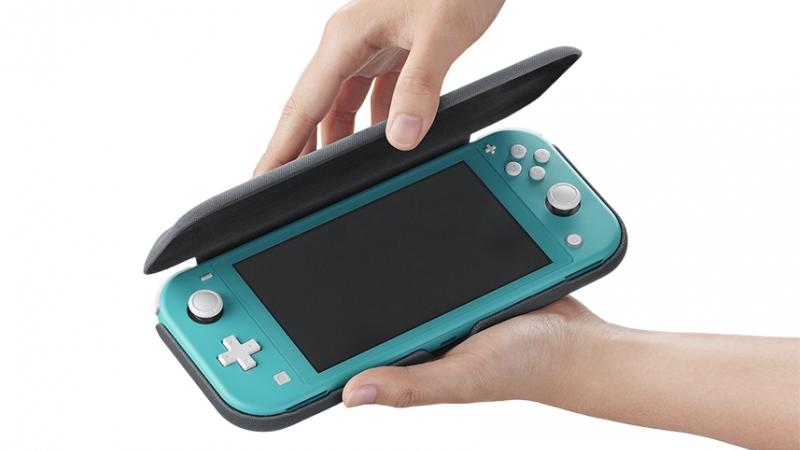
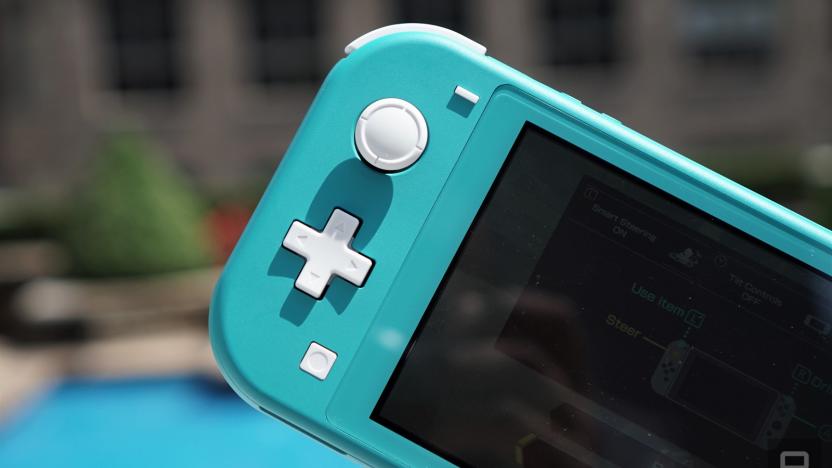
We'll admit it: We couldn't keep our mouths shut. Not just that -- we couldn't keep our eyes from bulging out of their sockets and our feet from skipping up and down the LA Convention Center halls. The 3DS technology was that impressive in person (in the midst of an otherwise fairly ho-hum E3 year, especially). In fact, we were so wrapped up in our glee, we didn't notice Nintendo was watching. Very closely, apparently.
During Nintendo of Japan's analysts meeting yesterday, it was suggested that the now official ¥25,000 ($300) price point for the handheld might be pushing consumer limits, as reported by Bloomberg (via Andriasang). (It should be noted that prices have not been confirmed for other regions; though at least one analyst expects the 3DS to retail for $250 in the U.S.) In response, Nintendo boss Satoru Iwata said the price was set by a number of factors that went unspecificed, save for one: reaction to the device at E3.
Rest assured, we're already practicing our poker faces for the next time Nintendo unveils the future before our very eyes.
During Nintendo of Japan's analysts meeting yesterday, it was suggested that the now official ¥25,000 ($300) price point for the handheld might be pushing consumer limits, as reported by Bloomberg (via Andriasang). (It should be noted that prices have not been confirmed for other regions; though at least one analyst expects the 3DS to retail for $250 in the U.S.) In response, Nintendo boss Satoru Iwata said the price was set by a number of factors that went unspecificed, save for one: reaction to the device at E3.
Rest assured, we're already practicing our poker faces for the next time Nintendo unveils the future before our very eyes.
"This is gonna change the world." Since our E3 meeting with OnLive CEO Steve Perlman and Joe Bentley, director of games & media development, wasn't filmed, we have no way to convey to you the absolute sincerity with which Bentley said these words. He further assured us, "I left a very successful startup to do this."
Indeed he did -- three years ago, Bentley quit his "architect" job at outsourcing firm LiveOps (where he built software) for OnLive, after seeing parent company Rearden Labs' Mova motion capture technology. And now? Now he's busy helping manage the launch and continued growth of OnLive. He's also busy trying to convince us of the service's promise in the coming months and years.

"People want the freedom to put all their resources against the big opportunity, and that's what we're trying to do," Stohl explained during our conversation at last month's show. We wondered if the shift in strategy was less ingenuity and more a sign of the times. Last year's holiday season was headlined by two major events: the slowdown of music game sales and the ridiculous success of Modern Warfare 2.

If you think it must've been frustrating to be either Sony or Microsoft, both of which were busy showing off their newest motion-sensitive gadgetry, you'd be mostly right. Microsoft did have one small consolation prize: Dance Central, Harmonix's look-ma-no-coordination dancing game for Kinect, took the well-deserved Best Original Game and Best Motion Simulation prizes. None of Microsoft's first-party Kinect efforts and no PlayStation Move games, first-party or otherwise, made the list.
Find the entire list of award winners, with links into our game pages for all of our coverage, after the break.

This longing came up as I demoed this well designed but ultimately vanilla twin stick shooter at Sony's E3 booth. As one of the world's remaining survivors during the zombie apocalypse, I made my way through a devastated city, pointing boom sticks towards throngs of monsters and ripping them to pieces. The list of weapons included the usual suspects: submachine gun, assault rifle, shotgun, grenades; and I snagged health packs by breaking boxes and vending machines.
After publishing our E3 2010 preview of Ghost Trick: Phantom Detective, we worried that we hadn't adequately captured and conveyed the game's bizarre concept. We're not the only ones left a bit speechless by the amazing Ghost in the Rube Goldberg Machine adventure -- ooh, that's a good way to put it! -- as even the game's director, Shu Takumi, thought it a challenge to explain his new mystery game to the "bigwigs" at Capcom. Joystiq: When you first had the idea for Ghost Trick, you had to go to someone and say, "Hey, we should make this game." I want to hear what that first day was like, and what their reaction was.
Shu Takumi: Since I made the Ace Attorney series for so long, I was like, "Please let me do something new!" So I went up to the bigwigs and said this, and they said, "You go ahead and do what you want, we'll see what happens." The concept was really difficult to explain, so they were like, "Okay okay, why don't you make something and we'll see how it goes." So, that's what happened when I first presented the idea to make a new mystery game.

Parts six and seven -- the final two parts, mind you -- of the Portal 2 E3 video demonstration take a look at the mechanics of the game's new gels: Propulsion and Repulsion. As if anything could ever make Portal 2 repulsive! Ahem.
So, these gels: They're yet another new tricky (and likely toxic) product of the Aperture labs that just so happen to open up a variety of new platforming puzzles. Go on and watch the clips after the break -- they'll totally bend your mind. (Or maybe that's just the fumes from the gel. Yeah, probably.)
While at E3, we had a chance to speak with the always affable Shuhei Yoshida, President of Sony Computer Entertainment Worldwide Studios. That title means he's the man in charge of Sony's first-party software, which also means he's the man to ask about Team Ico's absence from the show (No Last Guardian? No Ico / Shadow of the Colossus HD remake?), Insomniac's multi-platform future, the responsibility of first-party studios in defining the potential of PlayStation Move, the oft-rumored Warhawk sequel, the new Twisted Metal game, and more.
Of all the PlayStation Move games at E3, The Fight: Lights Out was the one I had the most advance interest in. While I enjoyed pummeling my friends and foes in Wii Sports Boxing, I was curious if The Fight would be the next evolution of motion-controlled fighting games -- or just a pretty tech demo. After making short work of my computer-controlled opponent -- and working up a sweat in the process -- it's clear that Sony and developer Coldwood Interactive still have plenty of work to do on this third-person brawler.

According to Chahi, Project Dust is a God game based on manipulating nature. " The foundation of Project Dust is a simulation. It's like playing 'sandcastle' on the beach, except you have more material to use, like lava." Lava, he reminded us, isn't purely a destructive force -- it can also be used to shape the land and even create areas of land.
Interaction with your tribe of people is done through manipulation of the land, which mainly involves picking up materials and moving them around. The Ubisoft rep with Chahi explained that when you pick up something like water, it forms a free-floating sphere that the people can see and react to -- and they don't understand it. Right now, he said, the in-world significance of the levitating material is a mystery even to Ubisoft.
Perhaps it's my Canadian roots and the fact that I am one of two staff members that enjoys sports games but NHL 10 was one of the best titles released last year. After a shaky start in the current generation of consoles, the team at EA Canada has transformed the NHL brand into the premiere video game sports franchise.
Not content with adding a few adjustments to last year's winning formula, EA Canada is making drastic changes to NHL 11 – the 20th anniversary of the longstanding sports franchise. Unfortunately, of the gameplay changes I've seen, there may be some cause for alarm.
Most of the games games shown at E3 are not final retail versions; they're preview builds specifically developed to show at the industry's largest expo. Since this is the case, many developers will remind those playing its game or watching demos that what they're seeing is subject to change. "We still have to polish this," or "the animation over here isn't finished" are a few of the things you'll hear. It's expected.
However, sometimes demos are nothing but a string of apologies and promises. Splatterhouse was one of those titles. During my demo, the game's executive producer assured me that the game was still in production at every pass and that nearly everything I saw and played would be "fixed," "changed" or "polished." You can't blame Namco Bandai for being hesitant to show the game, considering the development hell it has been through -- but it was a little extreme, especially when considering that I thought the game looked good (even great in some spots!) apart from the expected poor framerate for an early build.
No, looks weren't an issue, but I did have a few others with the game during my short demo.
However, sometimes demos are nothing but a string of apologies and promises. Splatterhouse was one of those titles. During my demo, the game's executive producer assured me that the game was still in production at every pass and that nearly everything I saw and played would be "fixed," "changed" or "polished." You can't blame Namco Bandai for being hesitant to show the game, considering the development hell it has been through -- but it was a little extreme, especially when considering that I thought the game looked good (even great in some spots!) apart from the expected poor framerate for an early build.
No, looks weren't an issue, but I did have a few others with the game during my short demo.
With E3 2010 over and done with, and a glut of outlet-specific honors dispensed, it's time for the annual Game Critics Awards to reveal its list of nominees. Culled from the selections of "31 leading North American media outlets that cover the videogame industry" (including Joystiq!), the Game Critics Awards represent something of an industry consensus on The Big Show. This year, id Software's upcoming post-apocalyptic-'em-up Rage took home the most nominees, scoring five including Best of Show. Sharing the Best of Show nominee space are Disney's Epic Mickey, Dance Central, and Portal 2, each of which received four nominations across the boards.
We've got the entire list after the break, and check out the "Fast Facts" breakdown linked below for some flamewar-worthy stats (Xbox 360 leads the platform nominations with 46 versus PlayStation 3's 39). Notably, Electronic Arts had the most nominees for a publisher for the fourth year in a row, earning 15 nominations ... and that's not including the formerly EA Partners-signed Rage.
4A Games' Metro 2033 came out under the radar, but quickly became a sleeper hit with Joystiq staff, what with its heavy atmosphere and mature, bleak tone. So, as you could imagine, the announcement of a sequel in development makes our hearts glow as if they were just hand-cranked by a post-apocalyptic Russian.
In discussing the topic of 3D gaming with CVG, THQ's Danny Bilson said, "We're going to be doing a 3D version of that on Metro 2034 - the sequel. And there will be some engineering costs there, but that's in our lowest cost centre in the world."
Okay, so maybe we could do with a little more fanfare accompanying our game announcements, but there you have it.
In discussing the topic of 3D gaming with CVG, THQ's Danny Bilson said, "We're going to be doing a 3D version of that on Metro 2034 - the sequel. And there will be some engineering costs there, but that's in our lowest cost centre in the world."
Okay, so maybe we could do with a little more fanfare accompanying our game announcements, but there you have it.

For every Batman: Arkham Asylum or Epic Mickey, there's got to be someone out there bringing shoddy licensed games to the floor of E3. Bless Crave Entertainment then, because the publisher was back at it this year, showing off titles based on Discovery Channel's Deadliest Catch and Man vs. Wild TV shows, and a Brunswick-licensed PlayStation Move bowling game. The trio was quite generally terrible -- unpolished, unfinished, pretty blatant attempts to take a familiar name, slap it on some semblance of gameplay and make a few bucks from people buying something for the name on it.
So don't read the rest of this post because you're thinking of buying any of these games -- even if you happen to be a Deadliest Catch or Man vs. Wild fan, there are better and more enjoyable ways to spend your time with the properties (like, you know, watching the shows, which are both pretty well done). Instead, read on about the three most awkward moments of my time spent in Crave's E3 booth.
If you read my Tiger Woods PGA Tour 11 review, then you know that I'm totally on the bandwagon when it comes to motion-based golfing. Going into my E3 appointment to preview O Games' John Daly's Prostroke Golf, I didn't expect the game's Move functionality to add anything to the experience I couldn't already get with MotionPlus on the Wii. But Prostroke actually impressed me, thanks to some clever design decisions.
Formed in the mid-1980s, Reflections Interactive has been making games for longer than you might remember. While the studio has franchises like Shadow of the Beast and Destruction Derby under its belt, its longest standing franchise is Driver. This fall the wheelman returns in Driver: San Francisco, and Reflections -- now owned and operated by Ubisoft -- is once again steering the ride.
Also returning to the series is Reflections founder Martin Edmondson who, in March 2005, walked away from Reflections Interactive and filed suit against former publishing partner and company owner Atari for "constructive unfair dismissal" before settling in 2006. We spoke with Edmondson regarding Driver's return to the streets and the finer points regarding the upcoming game's "Shift" car jumping system.
While a lot of people have share an affinity for the Driver series, most would agree that the franchise has stalled. Although that's a hilarious pun in reference to cars, it's also the best way to say the series has failed to capture the respect it received when the first and the second games (depending on who you ask) were released.
After taking a long hiatus to build a new, completely proprietary engine, the franchise has returned in Driver: San Francisco and brings with it a few new ideas.
The Joystiq Podcast
Super Joystiq Podcast 002: Max Payne 3, Starhawk, Minecraft, Street Fighter vs. Mortal Kombat
Latest episode: Friday, May 11th, 2012